Signing the Check Is the Easy Part: How Chamber Event Sponsors Surrender Their Competitive Advantage Before the First Guest Arrives
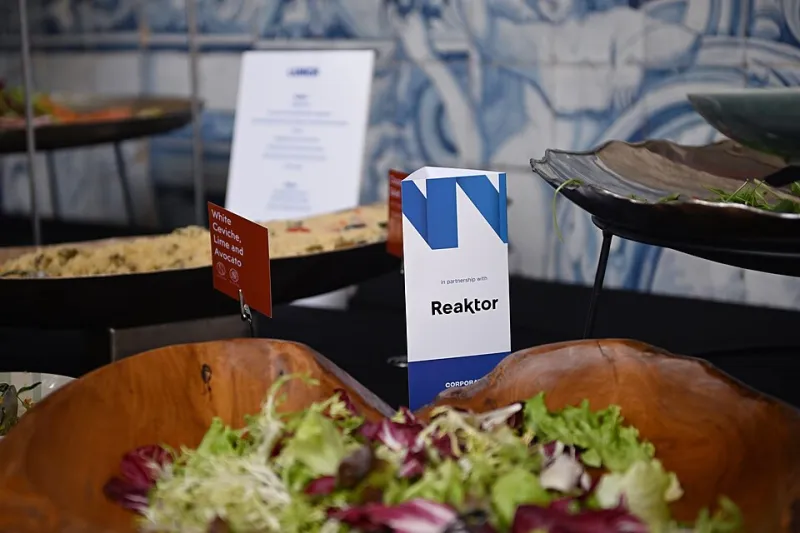
Photo: Web Summit, CC BY 2.0, via Wikimedia Commons
Every year, thousands of companies across the United States allocate meaningful portions of their marketing and business development budgets to sponsor chamber of commerce events. They secure naming rights to luncheons, underwrite annual galas, and fund industry forums. Their logos appear on banners, programs, and email blasts. And then, in a pattern that repeats with remarkable consistency, they send two representatives who spend the evening clustered near the sponsored beverage station, collect a modest stack of business cards, and declare the investment a reasonable success.
It is not a reasonable success. In most cases, it is a significant missed opportunity dressed in a branded tablecloth.
The organizations that have genuinely mastered chamber sponsorship understand something their peers have not yet internalized: financial commitment to an event does not automatically confer relationship capital. That capital must be actively constructed, and the window to build it extends far beyond the event itself.
The Visibility Trap
Sponsor recognition is valuable, but it is not the same as sponsor influence. When a company's name appears prominently throughout an event, it creates awareness—a passive condition in which attendees register a brand's presence without necessarily forming any meaningful association with the people behind it.
This distinction matters enormously in a chamber context. Chamber events are, at their core, relationship environments. Attendees arrive with social and professional agendas. They are seeking conversations, not advertisements. A sponsor whose presence amounts to logo placement has effectively purchased a billboard in a room full of people who came specifically to talk to one another.
The companies that extract genuine value from sponsorship shift their orientation from visibility to engagement. They recognize that the sponsorship tier they have purchased grants them structural access—to event planning committees, to pre-event attendee lists in appropriate contexts, to post-event communications channels—and they use that access deliberately.
What the Pre-Event Window Actually Offers
Perhaps the most consistently squandered phase of chamber event sponsorship is the period before the event occurs. Sponsors who engage the chamber's staff and event committee during the planning process gain something their non-sponsoring peers simply cannot access: advance intelligence.
This is not a matter of receiving proprietary information inappropriately. It is the natural consequence of being an invested participant rather than a passive attendee. Sponsors who ask thoughtful questions—about the anticipated audience composition, the thematic focus of programming, the speakers or panelists being considered—position themselves to arrive with relevant talking points, targeted introductions in mind, and a clearer sense of where their value proposition aligns with attendee priorities.
Many sponsors forgo this entirely, submitting their payment and their logo files and then waiting for the event to arrive. By doing so, they cede the preparation advantage to any engaged non-sponsor who simply shows up having read the agenda carefully.
Sponsor representatives who serve on event planning committees—a role most chambers welcome—gain an additional layer of credibility. They become known to the chamber's leadership and staff in a more substantive way, and they often have natural conversational currency on the event floor: they helped make this happen, and other attendees know it.
The Event Floor: Engineering Encounters Rather Than Waiting for Them
During the event itself, the distinction between passive and active sponsors becomes most visible. Passive sponsors staff a table, wait for foot traffic, and engage whoever approaches. Active sponsors engineer encounters.
What does this look like in practice? It begins with role assignment. Sponsors who send representatives with clearly defined objectives—specific individuals to meet, particular conversations to initiate, concrete follow-up actions to propose—consistently outperform those who dispatch a team with the general instruction to "network."
It also involves leveraging the sponsor's structural position within the event. If a sponsoring company has a representative on stage, at a podium, or facilitating a breakout session, that individual occupies a position of perceived authority that extends beyond the session itself. Attendees approach speakers and facilitators; the inverse is rarely as effective.
For sponsors without a formal speaking role, proximity to high-traffic programming moments—the period immediately following a keynote, the transition between sessions—creates organic opportunities for substantive introductions that feel contextually natural rather than transactional.
After the Applause: The Follow-Up Failure
If the pre-event window is the most underused phase, post-event follow-up is the most inconsistently executed. The business cards collected at a chamber event have a half-life. The conversations that felt meaningful on a Thursday evening begin to fade by the following Monday, and by the end of the week, the connection exists primarily in a stack of cards that has not yet been entered into a CRM.
Sponsors who treat post-event outreach as a rote task—a templated email dispatched to every contact with a variation of "it was great to meet you"—generate proportionally rote responses. Those who invest in differentiated follow-up, referencing specific conversation details or offering a concrete next step relevant to the contact's expressed interests, convert introductions into relationships at a meaningfully higher rate.
The sponsorship tier also provides a legitimate and non-intrusive reason to follow up. A sponsor can share post-event content, reference the event's outcomes, or invite contacts to a subsequent initiative that grew from the event's conversations. These touchpoints feel earned rather than presumptuous because the sponsoring company's role in facilitating the original gathering is already established.
Rethinking the Return on Sponsorship
For chamber members evaluating their sponsorship investments, the relevant question is not whether the logo received adequate placement. It is whether the sponsorship was deployed as a relationship-building platform with the same strategic intentionality applied to other business development activities.
This reframe has practical implications for budget allocation, staffing decisions, and pre-event preparation. It also has implications for how organizations evaluate success. A sponsorship that generates three substantive relationships with high-potential partners is considerably more valuable than one that delivers a thousand logo impressions and a tepid acknowledgment from the podium.
Chambers of commerce exist to connect businesses and advance commerce—a mission that sponsorship, at its best, directly supports. But the mechanism through which that mission is fulfilled is human connection, not financial transaction. The check opens the door. What happens next is entirely up to the sponsor.
Organizations that understand this distinction do not merely fund events. They use events as structured occasions to advance relationships that compound over time—relationships that generate referrals, partnerships, and commercial opportunities that dwarf the original sponsorship investment many times over.
The companies still treating sponsorship as a checkbox are not just leaving money on the table. They are funding a room full of competitive conversations they are not part of.