Trust Over Algorithms: Why Chamber-Driven Referrals Are Outperforming Digital Ad Spend for Mid-Market Businesses

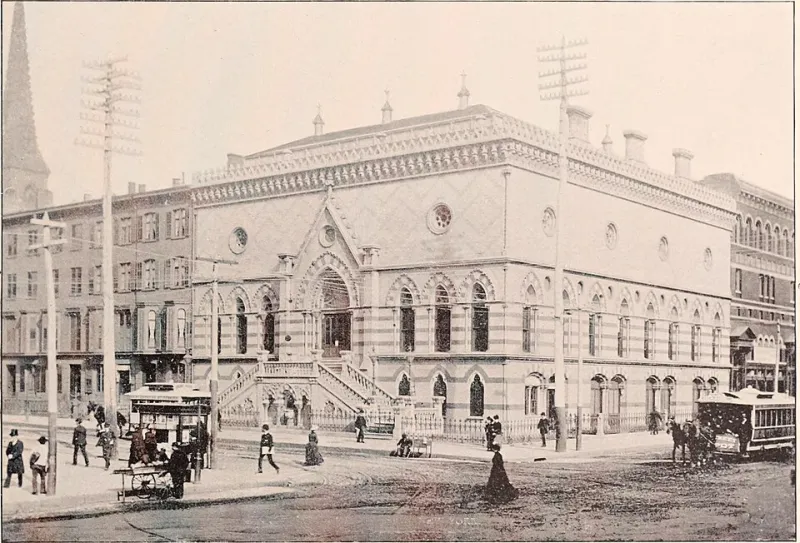
Photo: Anesu gerry rasgam, CC BY-SA 4.0, via Wikimedia Commons
For the better part of a decade, the conventional wisdom in business development was straightforward: pour resources into digital channels, optimize for search, and let the algorithms do the heavy lifting. Paid search, programmatic display, and social media retargeting became the default playbook for companies of virtually every size. Yet something has shifted. Across boardrooms and budget reviews, a quieter reallocation is underway—and local business networks are the primary beneficiaries.
Chamber of commerce membership, long viewed by a certain class of executive as a legacy formality, is experiencing a measurable resurgence. The reason is less about nostalgia and more about math.
The Cost of Algorithmic Dependence
The economics of digital advertising have deteriorated steadily for mid-market businesses. Average cost-per-click in competitive B2B categories on major search platforms has risen sharply over the past three years, while click-through and conversion rates have declined in parallel. According to data aggregated across multiple industry benchmarks, the average B2B company now spends between $150 and $300 to generate a single qualified lead through paid digital channels—a figure that compounds quickly when pipeline volume requirements are high.
Beyond cost, there is a quality problem. Algorithmic targeting, however sophisticated, cannot replicate the contextual intelligence that comes from a peer introduction. A lead generated through a paid search ad arrives with no prior trust, no social proof, and no relational context. The sales cycle that follows is longer, the close rate lower, and the average contract value frequently smaller than deals that originate through a warm referral.
Executives who have spent years optimizing digital funnels are increasingly confronting this reality. The tools that promised precision have delivered volume without depth.
What Chamber Networks Actually Deliver
The structural advantage of a chamber-facilitated introduction lies in what behavioral economists call social proof at the point of origination. When a fellow chamber member recommends a vendor, service provider, or strategic partner, that recommendation carries the implicit endorsement of a shared institutional affiliation, repeated in-person contact, and a mutual accountability that no algorithm can manufacture.
Consider the experience of a regional logistics company based in the Mid-Atlantic corridor. After three consecutive quarters of declining returns on a six-figure digital advertising budget, the company's VP of Business Development made a deliberate decision to redirect approximately 30 percent of that spend toward active chamber engagement—sponsoring industry roundtables, participating in member-to-member referral programs, and joining two standing committees within their regional chamber. Within eighteen months, the proportion of new contracts originating from chamber-connected introductions had grown from roughly 8 percent of total new business to just under 27 percent. The average deal size from those introductions was 40 percent higher than leads sourced through paid digital channels.
This pattern is not isolated. A professional services firm in the Southeast reported similar outcomes after restructuring its business development strategy around chamber committee participation and peer referral cultivation. The firm's managing partner noted that the sales cycle for chamber-referred prospects was, on average, 35 percent shorter than for digitally sourced leads—a compression that has direct implications for revenue predictability and resource allocation.
The Referral Architecture That Makes It Work
Not all chamber engagement produces these outcomes. The businesses achieving the strongest results share a common structural approach: they treat their chamber membership as a referral infrastructure rather than a passive credential.
This distinction matters enormously. Passive members attend occasional events, collect business cards, and allow their listing to sit in the member directory. Active members build deliberate referral relationships by identifying complementary businesses within the chamber ecosystem, investing time in committee work that creates repeated exposure, and developing a reputation for reciprocal referral behavior—meaning they send business before they expect to receive it.
The most effective practitioners also leverage chamber staff relationships as a connective tissue. Chamber executives and membership directors typically possess an unusually broad view of member needs and capabilities. Businesses that cultivate those relationships position themselves to be mentioned when a fellow member expresses a need that aligns with their offering—an organic form of lead generation that carries zero media cost.
Executive Fatigue and the Authenticity Premium
There is a cultural dimension to this shift that deserves acknowledgment. After years of increasingly automated outreach—AI-generated cold emails, algorithmically targeted ads that follow prospects across every platform, chatbots that simulate human engagement—a significant cohort of senior executives has developed a pronounced aversion to transactional digital touchpoints.
This aversion is not merely aesthetic. It reflects a rational recalibration of where trust is formed and where consequential business decisions are made. Research consistently demonstrates that high-value B2B purchases—the contracts that materially move a company's revenue—are disproportionately influenced by personal relationships and peer recommendations. The executive who has been approached by 200 AI-generated outreach sequences in a quarter is not more likely to respond to the 201st. They are, however, meaningfully more likely to take a call from someone they met at a chamber event two months prior.
This is the authenticity premium, and it is one that local business networks are structurally positioned to deliver in ways that no technology platform can replicate at scale.
Measuring the Return with Rigor
One legitimate critique of relationship-based business development has historically been the difficulty of measuring its contribution to revenue. Digital channels produce dashboards; chamber relationships produce conversations. This measurement gap has, in the past, made it easier to justify digital spend in budget reviews regardless of its actual performance.
That gap is narrowing. A growing number of chamber-engaged businesses are applying the same attribution discipline to their referral activity that they once reserved exclusively for digital campaigns. By tracking the origination source of every qualified opportunity—and following those opportunities through close, average contract value, and client retention—companies are building the evidentiary case that peer-sourced business outperforms algorithmically sourced business on virtually every metric that matters.
For organizations serious about this analysis, the recommendation is straightforward: begin tagging every new business inquiry by source at the point of first contact, maintain that attribution through the full sales cycle, and review the resulting data quarterly against channel-specific cost inputs. The comparison, for most mid-market companies, is instructive.
A Strategic Reallocation Worth Considering
The businesses achieving the most compelling results are not abandoning digital channels entirely. Search presence, content marketing, and targeted digital outreach retain legitimate roles in a diversified business development strategy. What is changing is the proportion of investment and the seniority of attention directed toward each channel.
For GCCI USA members navigating this recalibration, the practical implication is clear: chamber engagement is not a supplement to a real business development strategy. For a growing number of high-performing mid-market companies, it has become the strategy around which other channels are organized.
The algorithms will continue to evolve. The cost of digital attention will continue to rise. The value of a trusted peer introduction, by contrast, is not subject to platform updates or auction dynamics. That structural stability is precisely why relationship-first commerce is not merely experiencing a renaissance—it is establishing a durable competitive position that technology-dependent competitors will find difficult to close.